
Flatbed vs. Wheel-Lift Towing: Which Does Your Car Need?
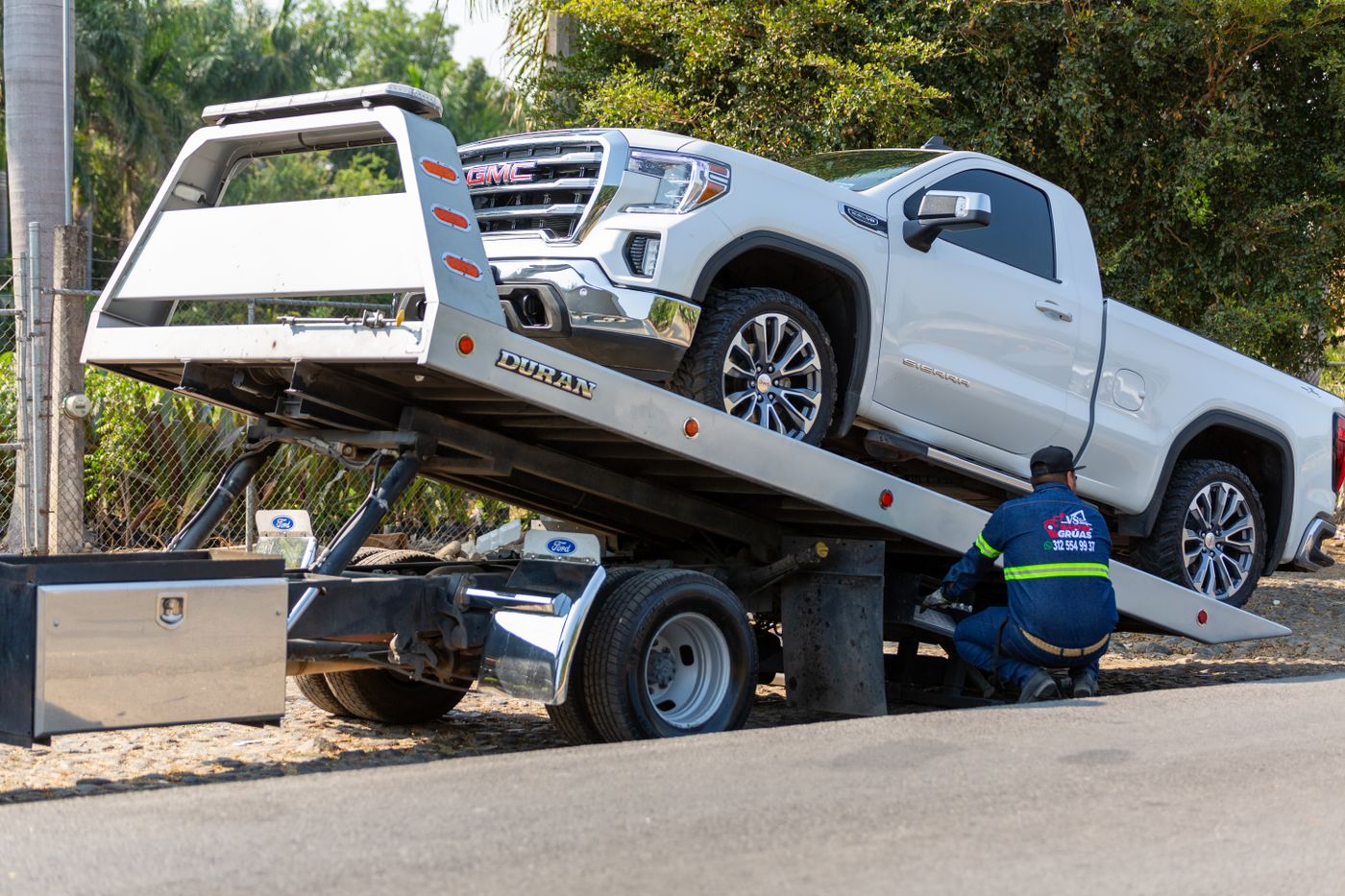
- A flatbed carries the whole vehicle on the truck. A wheel-lift lifts one end and lets the other two wheels roll on the road.
- All-wheel drive and 4x4 vehicles usually need a flatbed. Subaru, for one, says a flatbed is the only recommended way to move its AWD cars.
- Flatbeds are also the safer choice for wrecked cars, low cars, and long trips.
- A wheel-lift can reach places a flatbed can’t, like low parking garages and tight spots.
- We run flatbeds only. If your situation really needs a wheel-lift, we’ll tell you so up front.
When you call for a tow, you probably don’t care what kind of truck shows up. You just want the car moved. But the type of truck matters more than most people think, and for some vehicles, the wrong one can do real damage on the way to the shop.
Flatbed towing and wheel-lift towing are not the same job. Here is the difference in plain terms, when each one makes sense, and why we chose to run flatbeds.
What’s the difference?
The bed tilts down, the vehicle gets pulled up onto it, and all four wheels ride on the truck. Nothing touches the road.
A metal arm cradles the front or rear wheels and lifts that end. The other two wheels roll along on the pavement behind the truck.
You might also hear about the old hook-and-chain trucks that lifted cars by the frame or bumper. Those are mostly gone for passenger cars now, because they can scratch or bend modern bumpers and bodywork.
When you need flatbed towing
For a lot of vehicles on the road today, flatbed towing is not just nicer. It’s what the manufacturer calls for.
- All-wheel drive. AWD sends power to all four wheels, so rolling any of them on the road while the others are lifted can damage the drivetrain. Subaru’s own owner’s guide says a flatbed truck is the only recommended way to transport its AWD vehicles.
- Four-wheel drive trucks and SUVs. Many can be towed other ways with the right setup, but a flatbed takes the guesswork out.
- Wrecked vehicles. If a wheel is bent, a tire is flat, or the suspension is damaged, the car may not be able to roll safely at all.
- Low cars. Sports cars and anything with a low front bumper can scrape or crack when one end is lifted.
- Longer trips. The farther you go, the more wear two rolling wheels take. On a flatbed, the car isn’t putting on any miles.
- Automatic transmissions on some cars. Rolling the drive wheels can harm some transmissions. Your owner’s manual will have a towing section that spells it out.
Not sure what your car has? Look in the owner’s manual under “towing” or “emergency towing.” Or just tell us the year, make, and model when you call. We’ll figure it out.
When a wheel-lift makes sense
We’re a flatbed company, but we’re not going to pretend a wheel-lift is never the right tool. There are a few situations where it’s the better fit:
- Low parking garages. A flatbed is tall and long. Some garages don’t have the height or the room to get one inside.
- Very tight spots. A car wedged into a narrow alley or nosed into a tight space can be hard to reach with a flatbed.
- A quick move of a two-wheel-drive car. For a short tow of a front-wheel-drive car that rolls fine, a wheel-lift can work well.
If your car is somewhere a flatbed truly can’t get to, we’ll tell you that on the phone instead of sending a truck that can’t do the job. We’d rather be honest and save you the wait.
Why we run flatbed towing only
Simple: flatbed towing is the safest way to move the widest range of vehicles. AWD SUVs, crossovers, and 4x4 pickups are everywhere in Elkhart County, and a flatbed handles all of them without worrying about the drivetrain. It’s gentler on wrecked cars, it doesn’t add miles to your car, and your vehicle arrives at our shop the same way it left.
We run light-duty flatbed towing, which covers cars, SUVs, minivans, and most pickups. We don’t do heavy-duty towing like semis or big box trucks.
And because we tow into our own shop on Co Rd 138, the car goes straight from the flatbed into a repair bay if it needs work. One call, one shop. See everything we offer on the towing page.
What to tell us when you call
A few details help us bring the right truck for flatbed towing and get there ready:
- Year, make, and model, and whether it’s AWD or 4x4 if you know
- Where you are, as exact as you can. A mile marker, cross street, or business name helps.
- Does it roll and steer? Is it stuck in a ditch or snow?
- Where it’s going, our shop, your house, or somewhere else
- Do you have the keys?
If it’s stuck in a ditch or soft ground, say so. It needs to be winched out before it can go on the bed. And while you wait on the shoulder, stay well off the road. Indiana’s Move Over law requires drivers to move over or slow down for a disabled vehicle with its hazards on, but not everybody does. Turn your flashers on and don’t count on it.
For more on the moments before the truck arrives, see what to do when your car breaks down. If you’re trying to decide whether you need a tow at all, start with can you drive it, or do you need a tow. And if your car was towed by police and you’re trying to find it, here’s how to get it back.
Quick answers
Is a flatbed tow better than a wheel-lift?
For most modern vehicles, especially AWD, 4x4, wrecked, or low cars, a flatbed is the safer choice because no wheels touch the road. A wheel-lift is handy in tight or low spaces a flatbed can’t reach.
Can an all-wheel-drive car be towed with two wheels down?
Generally, no. Rolling some wheels while others are lifted can damage an AWD drivetrain. Subaru says a flatbed is the only recommended way to transport its AWD vehicles. Check your owner’s manual for your car.
Do you have wheel-lift trucks?
No. We run light-duty flatbeds only. If your car is somewhere a flatbed can’t reach, like a low parking garage, we’ll tell you on the phone.
Can you tow my pickup truck?
Most standard pickups, yes, along with cars, SUVs, and minivans. We don’t do heavy-duty towing.
Can you get my car out of a ditch?
Yes. Mention it when you call so we come ready to winch it out before loading it.
Flatbed towing, straight to our shop.
Light-duty flatbed towing, roadside help, and winch-outs across Goshen and Elkhart County.
See Our Towing Services