
What to Do When Your Car Breaks Down
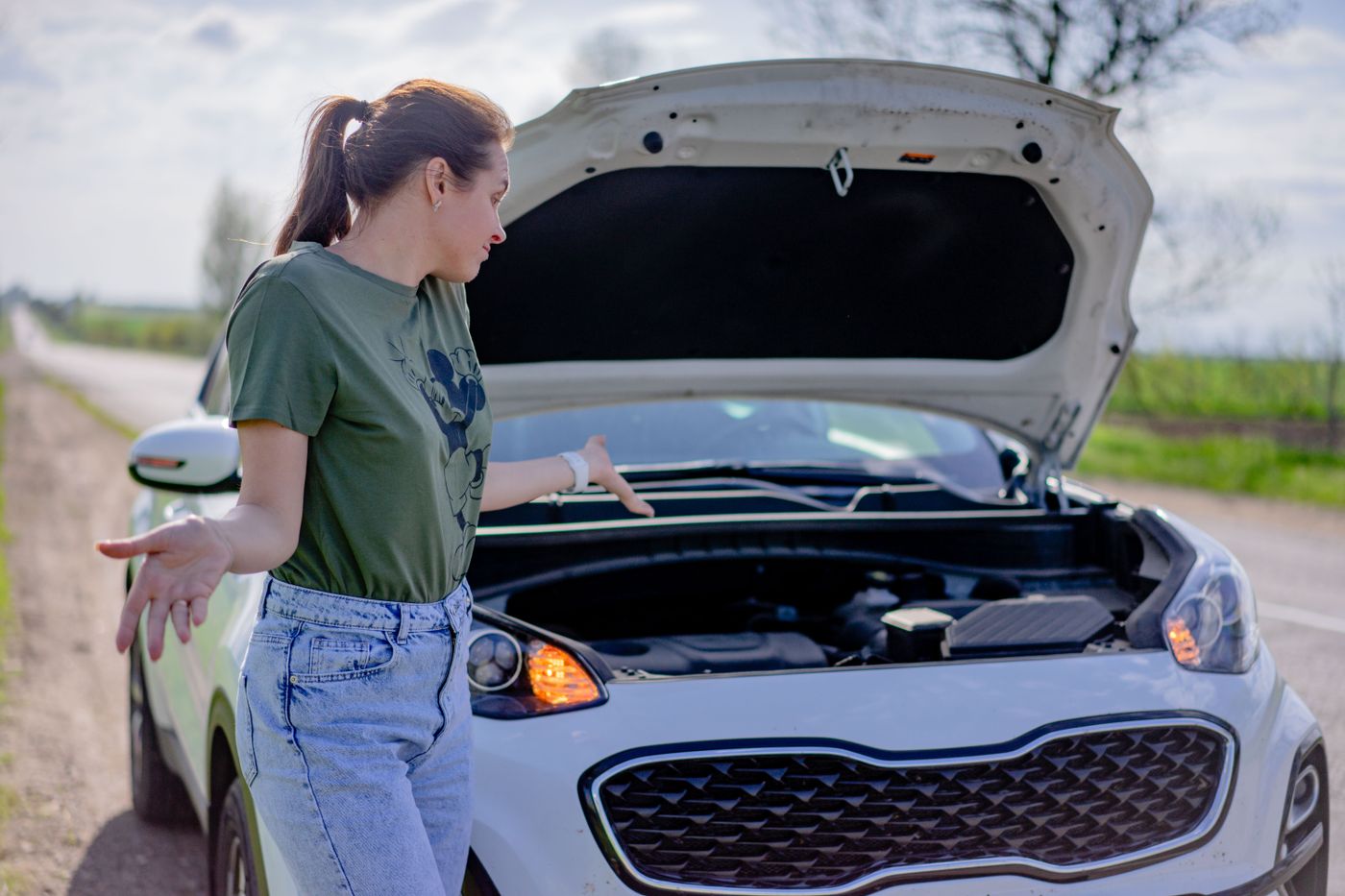
- Get the car off the road first, then get yourself away from it. Standing next to a disabled car on the shoulder is the most dangerous part of a breakdown.
- Hazards on immediately, even in broad daylight. Indiana’s Move Over law keys off those flashing lights.
- Get out the passenger side and wait behind a guardrail or well off the pavement, not in the driver’s seat.
- Three things make the truck come faster: where you are, where it’s going, and whether the car still rolls and steers.
- If it’s sitting in a live lane and won’t move, call 911 first, then call us.
It never happens at a convenient time. You’re on the 33 bypass heading home, or halfway to Middlebury on a two-lane with no shoulder to speak of, and the car starts doing something it has never done before. Steam, a shudder, a dead pedal, a dashboard that lights up all at once.
What you do in the next couple of minutes matters more than most people realize — not for the car, but for you. We pick up vehicles all over Elkhart County, and the calls that go badly almost never go badly because of the car. Here’s the order we’d want our own family to do it in.
Get the car off the road while it still moves
The moment you know something is wrong, start looking for somewhere to put the car. Don’t wait to figure out what the problem is first. A car that’s dying still has momentum, and momentum is the only thing that gets you off the pavement without a winch.
Signal, ease right, and coast. A gas station lot, a church lot, a wide gravel shoulder, a field entrance — anything is better than a traffic lane. If you’re on US-33 or SR-15 and there’s a lot coming up within a quarter mile, aim for it. Losing power steering makes the wheel heavy but not immovable, and losing power brakes means the pedal gets hard, so push harder and start slowing sooner than feels normal.
Turn your hazards on as you’re moving over, not after you’ve stopped. That’s the signal other drivers actually register.
Why the hazards matter more than you think
Indiana’s Move Over or Slow Down law requires other drivers to change lanes away from a stopped vehicle with its hazards on — or, if they can’t move over safely, to slow to at least ten under the limit. That protection is tied to those flashing lights. A dark car on the shoulder gets none of it.
It covers tow trucks too, which is worth knowing when our driver is standing next to your car hooking it up. Put the hazards on the second you pull over, and leave them on until the truck is loaded and gone.
Get out on the passenger side — and get away from the car
This is the step people skip, and it’s the one we’d underline twice. Sitting in a disabled car on a shoulder feels safe, because the car feels like a shell around you. It isn’t. If someone drifts, the car is exactly where they drift into.
Climb out the passenger door if traffic is on your left, and walk well away — behind a guardrail if there is one, up a bank, into the grass, past the fence line. Far enough that if something hits the car, you’re not part of it. Then make your calls from there.
One exception: if you’re stopped in a live lane on a busy stretch and getting out would put you in traffic, stay belted in with the hazards going and call 911 first. Let them shut the lane down. That’s a different situation than a shoulder, and the right answer flips.
Take your things with you
Phone, wallet, keys, registration, and the kids’ car seats if you’re catching a ride. Whatever is in that vehicle goes wherever the truck goes, and it may sit in a lot overnight before anybody looks at it. Two minutes of gathering saves a trip back across the county.
Grab the garage door opener off the visor too. Small thing, easy to forget, aggravating to be without at ten at night.
What to tell us when you call
We can usually have a truck rolling within a minute of the call if we know three things. Everything else can wait until the driver gets there.
A mile marker, a cross street, or the address your phone’s map is showing. “On 33” is thirty miles of road.
Our shop, your driveway, a dealer. It changes the truck we send and the route it takes.
Does it roll, steer, and brake? Is it in a ditch, mud, or snow? That decides whether we winch it first.
Tell us those three and you’ll have a real number and a real arrival time in about a minute. If the honest answer is that it’s better to leave it where it sits until morning, we’ll tell you that too.
Think about where it gets dropped
Here’s the part nobody thinks about while they’re standing on a shoulder in the dark: most towing companies pick your car up, drop it at somebody else’s shop, and drive off. Then you’re making a second call in the morning, waiting for an opening, and explaining the whole thing over again to a stranger.
We tow into our own bay on Co Rd 138 in Goshen, look at it, and call you with what we found. One call, one shop, one bill. And having it towed here doesn’t commit you to the repair — we’ll tell you what’s wrong either way, and the look is on us. You can see the whole rundown on our towing page, or just get in touch.
The breakdowns we see most
A fair number of the cars we pick up had been giving warnings for weeks. A battery that had been cranking slow, a temperature needle that crept up on hot afternoons, a noise that got a little louder every week. None of those are dramatic on their own. They’re just the version of the problem that happens in your driveway instead of on the shoulder.
Staying current on the ordinary stuff is most of the fix. The nonprofit Car Care Council keeps a plain maintenance guide worth skimming once a season, and AAA has straightforward advice on what to keep in the car for the day it does happen. A flashlight, a phone cable, and a jacket cover most of it.
Quick answers
Should I put out flares or a reflective triangle?
If you have one and you can set it out without walking into traffic, it helps — place it well back up the road so drivers see it in time. If setting it out means standing on the pavement, skip it. Hazards on and you standing clear is the safer trade.
Should I open the hood?
A raised hood is a recognized signal that a car is disabled, so it does help. Just don’t start poking around under there, especially if the car ran hot — a hot cooling system is under pressure and can burn you badly.
How long will it take you to get there?
It depends on where you are and what’s already out. Emergency response takes priority over vehicles that just need moving, and we’ll give you an honest time when you call rather than a hopeful one.
Do you tow outside Goshen?
Yes. We run US-33, SR-15, and the county roads in between, and we regularly pick up in Elkhart, Middlebury, Millersburg, New Paris, Bristol, and Wakarusa. Further out is usually fine — just ask when you call.
Can you tow it to my house instead of the shop?
Absolutely. Tell us where it’s going when you call and we’ll take it there. Plenty of people have it dropped at home and decide about the repair later.
Broken down? We’ll come get you.
Flatbed and light-duty towing, roadside assistance, and accident recovery across Goshen and Elkhart County — into our own shop, so you only make one call.
See Our Towing Services