
Hit a Deer? What to Do Next
- Get safe first. Hazards on, pull off the road if you can, and stay in the car if you’re on a busy road.
- Don’t go near the deer. An injured deer can kick hard enough to hurt you badly.
- Call the police. You’ll want a report for insurance, and in Indiana an officer can give you a permit if you want to keep the deer.
- Check the car before you drive it. Leaking fluid, a pushed-in radiator, or a light that won’t work means it goes on a truck.
- If you hit a deer, you are usually covered by comprehensive, not collision. Swerving into a tree is a different story.
It happens fast. A shape at the edge of your headlights on a county road outside Goshen, a thump, and then you’re sitting on the shoulder with your heart pounding and no idea what to do next.
If you just hit a deer, take a breath. This is one of the most common calls we get in the fall, and there’s a simple order to handle it in.
Why fall is deer season on the road
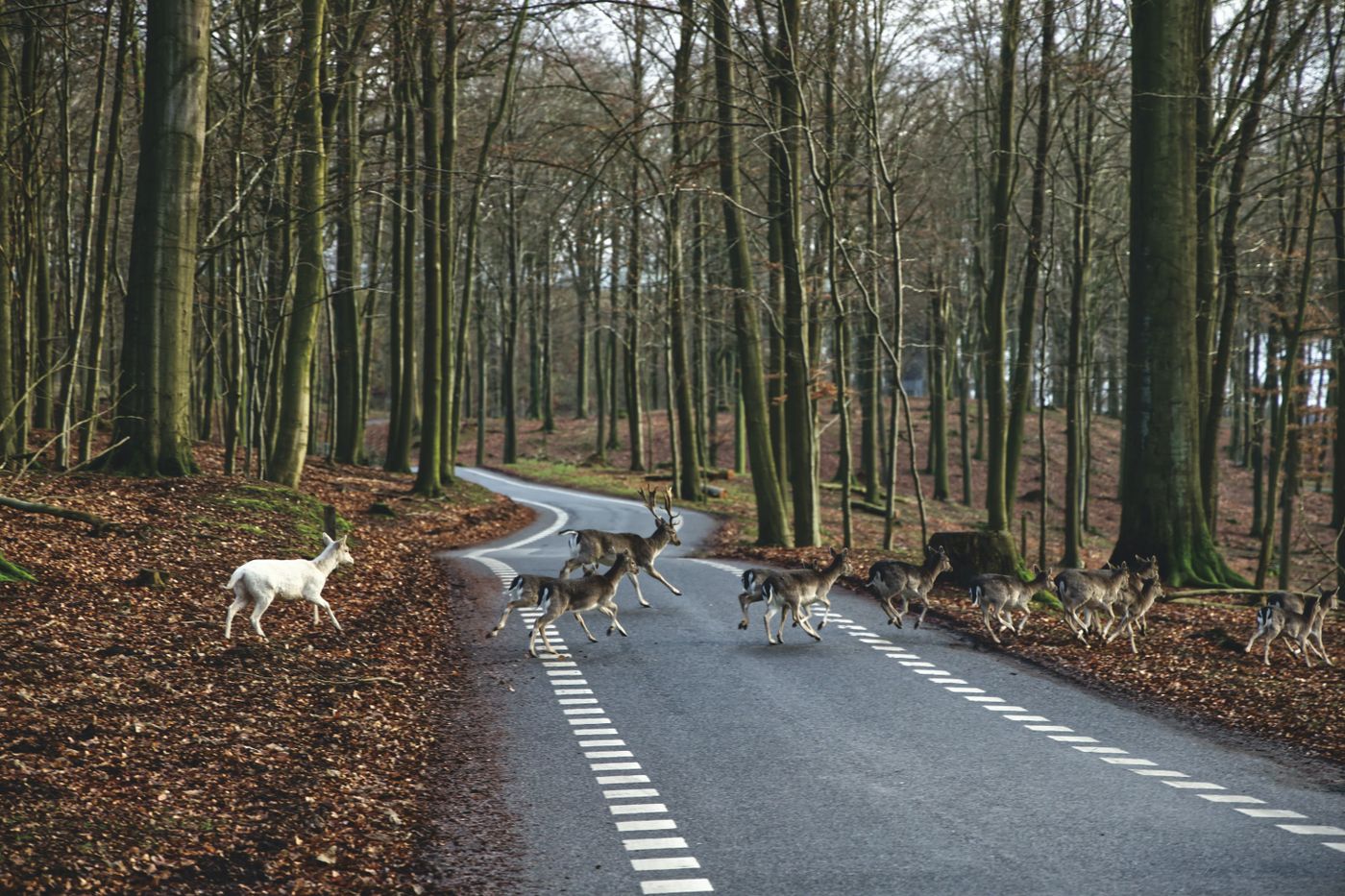
The Indiana DNR says more than 15,000 deer-vehicle collisions are reported in the state every year, and they peak in October and November during mating season. Deer are moving more, they’re less careful, and they’re most active at dawn and dusk, right when most of us are driving to and from work.
Nationally, State Farm estimates about 1.7 million animal-collision claims in a year, with roughly 650,000 of them in October, November, and December alone. And if you drive up into Michigan, State Farm ranks it fourth in the country for the odds of hitting an animal.
The first five minutes after you hit a deer
Hazards on. Pull onto the shoulder if the car will move. On a busy road like 33 or SR-15, stay buckled in until help arrives.
Don’t try to move it or check on it. A hurt deer can get up suddenly and kick. The DNR says the same thing.
Use the non-emergency line unless someone is hurt or the deer is blocking traffic, then call 911. Ask for a report number.
The car, the road, the deer if it’s safe to photograph from a distance. Your insurance company will ask.
One Indiana-specific thing people don’t know: if you want to keep the deer, you need a permit. The DNR says a local or state police officer or a DNR conservation officer can issue one on the spot. You can also donate it to the Hunt for Hunger program.
Can you still drive it?
This is where people get into trouble. The car starts, the lights come on, and it seems fine, so they drive home. Then the temperature gauge climbs on the way, because the deer pushed the radiator back or cracked it.
Before you drive, walk around the front and look for these:
- Fluid on the ground, especially bright green, orange, or pink. That’s coolant, and it means the radiator or a hose is damaged.
- The hood won’t latch or is bent up. It can fly open at speed.
- A headlight is out. You’re on a dark road at the time of day deer are out. You need both.
- A tire is rubbing on bent metal, or the steering feels different.
- Any warning light that wasn’t on before.
If you see any of those, don’t drive it. Watch the temperature gauge closely even if everything looks fine, and read what to do when your car is overheating if it starts to climb. When in doubt, run through can you drive it, or do you need a tow.
What insurance covers when you hit a deer
Here’s the part that surprises people. According to Indiana Farm Bureau Insurance, it is usually covered by comprehensive coverage, because the deer is a moving animal and not something you ran into.
But if you swerve to miss the deer and hit a tree, a guardrail, or end up in the ditch, that’s usually collision, which often has a different deductible. If you only carry liability, neither one pays for your own car.
This is why the safety experts say do not swerve to miss a deer. Brake firmly, hold the wheel straight, and stay in your lane. Swerving is how a deer hit turns into a rollover or a head-on. It’s a hard instinct to fight, but it’s the right call.
Towing is its own question. We broke that down in does insurance cover towing in Indiana.
Getting the car towed and fixed
If the car can’t be driven, give us a call. We’ll bring it in on a flatbed to our own shop on Co Rd 138, so you’re not paying for a tow to one place and then another tow to the shop. The full list of what we do is on our towing page.
Once a car that hit a deer is here, we will look it over and tell you what’s damaged: radiator, headlights, grille, hood latch, bumper supports, and anything the insurance adjuster will want to see. Costs vary by make and model, and we’ll check it out at no cost.
One more thing that helps after you hit a deer: because we also run a parts yard, we can often track down a good used part like a headlight or grille for a lot of common vehicles. Ask us about it when you call, or send us a message.
And if you’re ever stuck on the shoulder for any reason, the steps in what to do when your car breaks down apply here too.
Quick answers
Do I have to report hitting a deer in Indiana?
Calling the police is the smart move. You’ll need a report for most insurance claims, and an officer can issue a permit if you want to keep the deer. If anyone is hurt or the road is blocked, call 911.
What if I hit a deer and it ran off?
Still check the car carefully, especially for coolant leaks and headlight damage. Don’t go looking for the deer. Take pictures of the damage and the spot where it happened, and call your insurance company.
Does insurance cover hitting a deer?
Usually under comprehensive coverage, according to Indiana Farm Bureau Insurance. If you swerved and hit something else instead, it’s usually collision. Liability-only policies don’t cover your own car either way.
Should I swerve to miss a deer?
No. Brake firmly and stay in your lane. Swerving is how people end up hitting a tree, rolling into a ditch, or crossing into oncoming traffic.
Can I drive my car after hitting a deer?
Only if nothing is leaking, both headlights work, the hood latches, nothing is rubbing a tire, and no warning lights are on. If the temperature gauge starts climbing, pull over and shut it off.
Hit a deer? We’ll take it from here.
Flatbed towing to our own Goshen shop, an honest look at the damage, and help finding parts.
See Our Towing Services