
Does Insurance Cover Towing?
- Basic Indiana auto insurance does not include towing. The coverage the state requires you to carry is liability — it pays for damage you cause to somebody else, not for getting your car off the road.
- Towing usually gets paid one of three ways: a roadside or towing-and-labor add-on on your policy, a covered claim after an accident, or an auto club or manufacturer program.
- You can find out which one you have in about two minutes — it’s on your declarations page.
- Insurance almost never pays for a tow just because the car broke down, unless you bought the add-on ahead of time.
- Either way, we quote you the price on the phone before a truck leaves the lot, so nothing is a surprise later.
People ask us this from the side of the road all the time, usually in the same worried tone: “Will my insurance cover this?” It’s a fair question and it deserves a straight answer, because the assumption most drivers carry around — that towing is just part of having insurance — is the one that costs them.
Here’s how it actually works in Indiana, in plain language, and how to find out what you have before you need it.
What Indiana actually requires you to carry
Indiana requires every driver to maintain liability coverage, and the state minimum runs 25/50/25 — $25,000 for injury to one person, $50,000 for injuries in one accident, and $25,000 for property damage. You can read the requirement straight from the source on the Indiana BMV’s financial responsibility page.
Notice what’s in that list and what isn’t. Liability pays for harm you do to other people and their property. It says nothing about your car, and nothing about getting your car home. A driver carrying exactly the state minimum has no towing coverage at all — and a lot of people carrying exactly the state minimum don’t know that.
The three ways a tow actually gets covered
When somebody’s tow does get paid for, it’s almost always one of these three. They’re different products, and having one doesn’t mean you have the others.
Sometimes called “towing and labor” or “roadside assistance.” An optional line you add to your policy. Usually covers a tow, a jump, a lockout, and a tire change — often up to a set distance or a set number of calls a year.
If you have collision or comprehensive and you’re in a covered accident, the tow from the scene is typically handled as part of that claim. This is the one that surprises people in a good way.
An auto club membership, or the roadside program that came with a newer vehicle and may still be active. Completely separate from your insurance company.
The Insurance Information Institute makes the same point in its guide to understanding your auto coverage: the extras like roadside assistance are worth reviewing once a year, because people tend to find out what they don’t have at the worst possible moment.
What usually is not covered
A plain breakdown with no add-on is the big one. If the transmission gives out on SR-15 and all you carry is liability, that tow is yours. Same for a car that won’t start in your own driveway.
A few other places people get caught:
- Distance caps. Many roadside add-ons cover a tow to the nearest qualified shop, or up to a certain number of miles. Past that, the difference is on you.
- Your choice of shop. If you want the car taken to a specific shop rather than the closest one, some policies cover part of it and not the rest.
- Storage. If the car sits in a lot for days, storage charges are handled differently than the tow itself, and often are not covered at all.
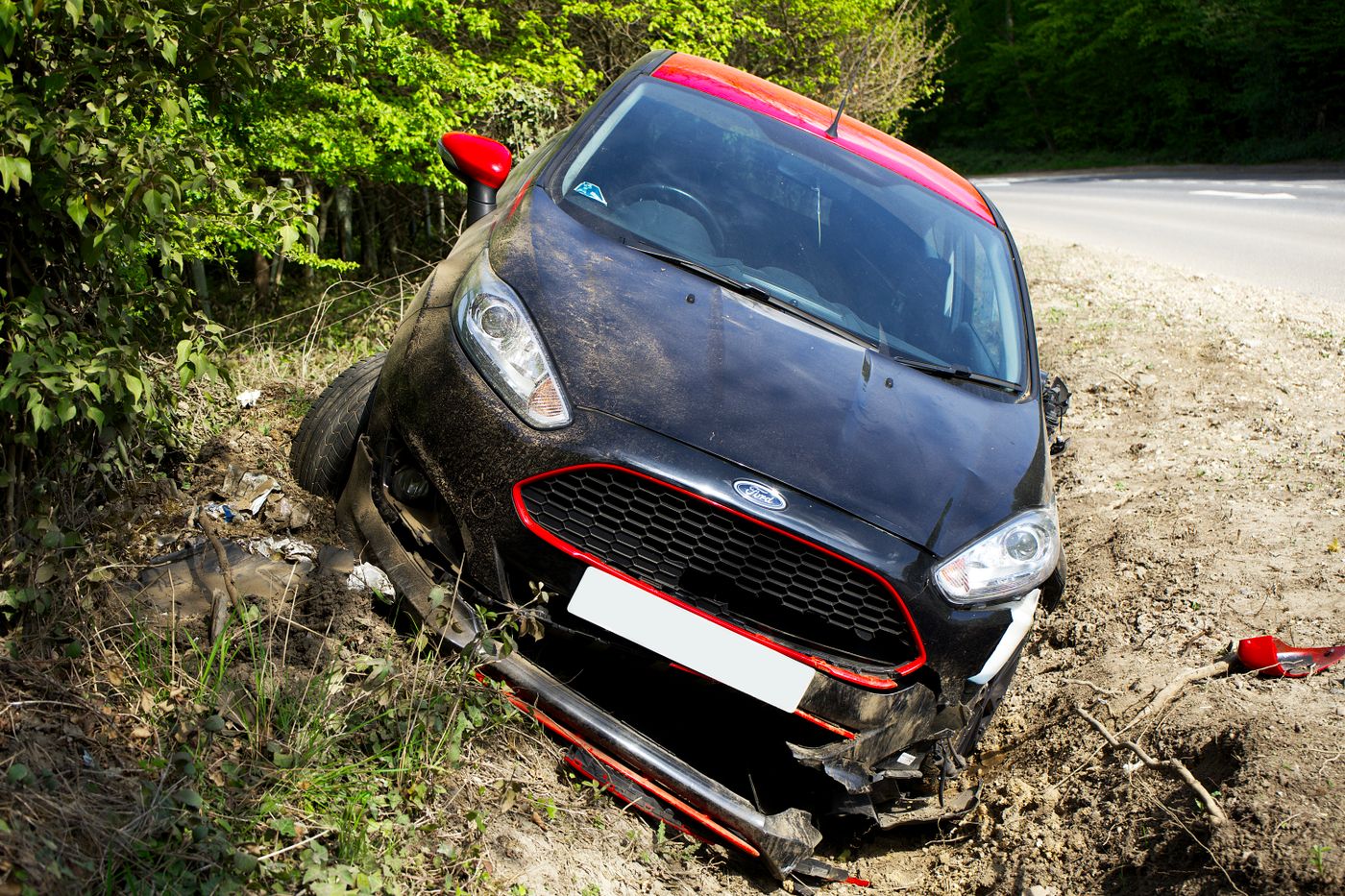
- Winching. A car in a ditch, in mud, or in snow has to be pulled out before it can be towed. Whether that’s covered depends entirely on your policy language.
Worth knowing: filing a small claim on a policy is a decision, not a formality. Before you turn in a minor tow, it’s reasonable to ask your agent how it affects you. That’s their job and it costs you nothing to ask.
How to find out what you have — today, not at midnight
Pull up your insurance app or find your declarations page — that’s the summary page listing your coverages and limits. Look for a line that says roadside assistance, towing and labor, or emergency road service. If it’s there, you have it. If it isn’t, you don’t.
Then call your agent and ask two questions: how many miles does it cover, and how many calls a year. Write the answers on the same card as your insurance card. The Indiana Department of Insurance keeps consumer information on auto coverage if you want to read up before that call.
Ten minutes now beats making that discovery on the shoulder in February.
What to do at the scene so a claim goes smoothly
If it was an accident and you think a claim is coming, a few photos make everything downstream easier. Get the car where it sits, the damage, the other vehicle, the road, and the plate. Take them before anything moves.
Keep whatever paperwork the tow driver hands you. If your insurer ends up paying, they’ll want it. And get the safety part right first — hazards on, out on the passenger side, well away from the car. We wrote out the whole sequence in what to do when your car breaks down.
How we handle it
We’re not an insurance company and we won’t pretend to know what your policy says. What we will do is tell you the price on the phone before a truck leaves the lot, so you can decide with real information instead of guessing. Nobody can give an honest towing number without knowing where the vehicle is, where it’s going, and whether it rolls and steers — tell us those three things and you’ll have an answer in about a minute.
The other piece worth knowing: we tow into our own bay on Co Rd 138 rather than dropping your car at a stranger’s shop. One call, one shop, one bill — and having it towed here doesn’t commit you to the repair. Details are on our towing page, and you can always reach out with a question before anything happens.
Quick answers
Does insurance cover towing after an accident?
Usually yes, if you carry collision or comprehensive and the accident is a covered loss — the tow from the scene is typically handled as part of that claim. If you only carry liability, it generally is not covered. Your policy is the final word, so ask your agent.
Does it cover a tow if my car just broke down?
Only if you added roadside assistance or towing-and-labor coverage to your policy, or you have an auto club or factory roadside program. A plain breakdown with liability-only coverage is not covered.
Do I pay you and get reimbursed, or do you bill the insurance company?
It depends on the situation and the insurer. Tell us up front that a claim may be involved and we’ll walk you through how it works for your case, and make sure you leave with the paperwork you’ll need.
Is roadside assistance coverage worth adding?
For most drivers it costs very little per year, and it tends to pay for itself the first time it’s used. Whether it makes sense for you depends on your vehicle, your commute, and what you already have — that’s a good question for your agent at your next renewal.
What if my car is in a ditch?
It has to be winched out before it can be towed, which is a separate step. Tell us that when you call so we send the right truck, and check your policy language on winching — it is not always covered the same way as a straight tow.
Covered or not, we’ll tell you the number up front.
Flatbed and light-duty towing, roadside assistance, accident recovery, and winching across Goshen and Elkhart County.
See Our Towing Services