
- The clearest signs your brakes are bad: squealing, grinding, a shaky or soft pedal, and pulling to one side.
- A squeal is often a built-in warning. Grinding means you waited too long.
- A pedal that sinks to the floor is an emergency. Do not drive it.
- Indiana road salt is hard on brakes. Rusty rotors and stuck calipers are common here.
- Get your brakes checked at least once a year, and any time something feels different.
You are rolling up to the light on Lincoln Avenue and hear it. A high squeal, or worse, a scraping grind. Or the pedal just feels different than it did last month.
Brakes rarely fail without warning. They tell you with sounds, with how the pedal feels, and with how the car stops.
Here is how to tell if your brakes are bad, which signs can wait a week, and which ones mean park it today. This comes straight from our brake jobs at our shop in Goshen.
How do I know if my brakes are bad?
Each warning sign points to a different part. Here are the big six.
Many pads have a small metal tab that squeals when they get thin. It is a built-in reminder to book a brake job.
The pad is worn to the metal and is cutting into the rotor. Every stop makes the repair bigger.
A pulse or shake when you brake usually means warped or uneven rotors.
The pedal feels spongy or sinks low. Often air or a leak in the brake fluid lines.
The car tugs left or right when you brake. A caliper may be sticking on one side.
A red brake light or an ABS light on the dash means the system found a problem.
One more: a hot, burning smell after driving. That can be a caliper that is stuck and dragging the whole time you drive.
Sounds: squeal vs. grind
The sound your brakes make tells us a lot. Here is how we sort it.
- A light squeal on the first few stops on a damp morning is often just surface rust on the rotors. If it goes away after a few stops, it is usually normal.
- A squeal that stays on every stop is often the wear tab. Schedule a check soon.
- Grinding or scraping means metal is touching metal. Stop putting it off.
- A clunk or knock when you brake can be a loose part or worn suspension.
For other sounds your car makes, see our guide to what that squeak, tick, or knock means.
What the pedal is telling you
Your foot is a great tool here. You press that pedal hundreds of times a week, so you will notice when it changes.
A pedal that shakes points to the rotors. Our post on why your car shakes when you brake goes deeper on that one.
A pedal that feels soft or spongy, or sinks closer to the floor, is more serious. It often means there is air or moisture in the brake fluid, or a leak somewhere in the lines. If the car also pulls when you brake, read why your car pulls to one side.
Pedal goes to the floor? Stop driving. If the pedal sinks all the way down, or you have to pump it to stop, your brakes are bad enough to be unsafe. Park it and call. A tow is the safe way to get it to a shop.
Why brakes wear faster here
Northern Indiana is tough on brakes, and road salt is the main reason.
Salt and slush sit on the brakes all winter. Rotors rust. Calipers seize up. Steel brake lines rust from the outside in. We see cars with good pads but rotors so rusty they cannot stop well.
Stop and go driving adds to it. Think of the lights through downtown Goshen, or the stops behind slow farm traffic and buggies on county roads. Each hard stop wears the pads a bit more.
Brake fluid wears out too. It soaks up moisture from the air over time, which can make the pedal feel soft and rust parts from the inside. That is why fluid is part of a good brake check.
How often to get brakes checked
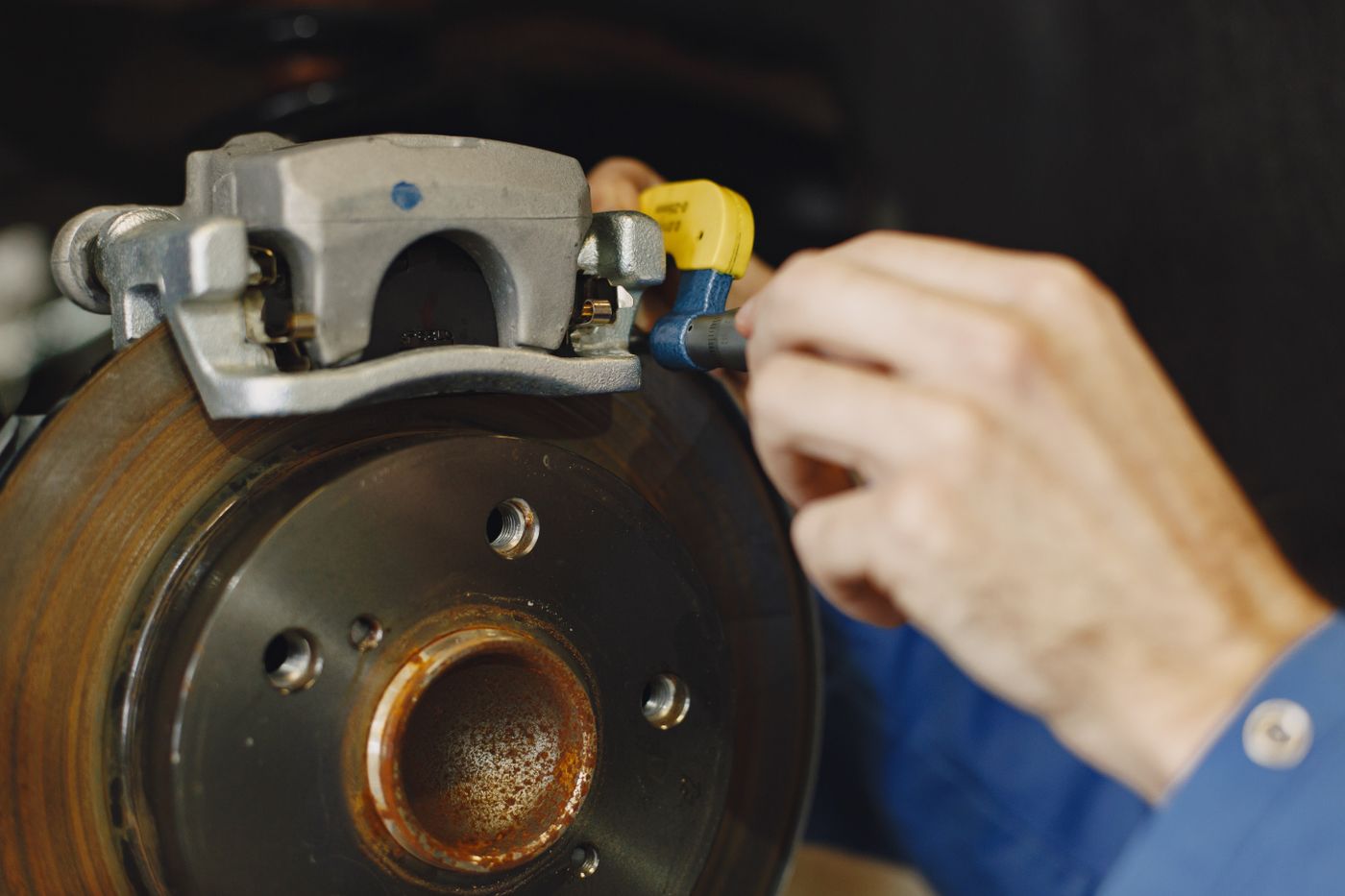
The Car Care Council says to have your brakes checked at least once a year. A good check covers pad wear, brake fluid, rotor thickness, hoses and lines, warning lights, and a test drive.
If you are not sure whether your brakes are bad, a quick look will tell us.
A tip: buy brake parts new. Pads and rotors are wear items. Our post on used auto parts vs. new explains why brakes are one place we never go used.
Brake repair in Goshen
Brake repair and replacement is one of the most common jobs in our bay. We work on domestic cars, trucks, and SUVs, plus Asian imports like Hyundai, Kia, Toyota, and Honda. You can see the rest of what we do on our auto repair services page.
What does a brake job cost? Costs vary by make and model, and by whether you need pads only or rotors and other parts too. Call us and we can check it out at no cost.
For tips on choosing any repair shop, AAA's auto repair guide is worth a look.
Quick answers
How do I know if my brakes are bad?
Squealing, grinding, a shaky or soft pedal, the car pulling when you brake, a burning smell, or a brake warning light are the most common signs.
How do I know if my brakes need to be replaced?
A squeal that does not go away, grinding, or a pad that looks thinner than about a quarter inch are good reasons to replace them. A shop can measure pads and rotors in a few minutes.
Is it safe to drive with grinding brakes?
Not for long. Grinding means metal is cutting into the rotor, which makes stops longer and the repair bigger. Get it in as soon as you can.
Why is my brake pedal soft?
A soft or spongy pedal usually means air or moisture in the brake fluid, or a leak. If the pedal sinks to the floor, stop driving and call.
How much does a brake job cost?
Costs vary by make and model and by which parts are worn. Call us and we can check it out at no cost.
Hear something when you stop?
Brake inspections and brake repair at our shop in Goshen, Indiana.
Call (574) 533-9081