
Why Is My Car Pulling to One Side?
- A car pulling to one side almost always has one of four problems: low tire pressure, uneven tire wear, alignment, or a sticking brake.
- Check your tire pressure first. It’s free, it takes two minutes, and it fixes more pulls than anything else.
- If it only pulls when you brake, that points to the brakes, not the alignment.
- A pull that shows up right after a pothole or a curb usually means the alignment got knocked out.
- A pull isn’t usually an emergency, but it wears out tires fast. Get it looked at within a week or two.
You let go of the wheel for a second on a straight stretch of 33 and the car drifts toward the ditch. Or toward the other lane, which is worse. Now you’re holding the wheel a little crooked everywhere you go, and your arms are tired by the time you get to work.
A car pulling to one side is one of the most common things we look at, and it is telling you something specific. The good news is that it’s usually one of a short list of things, and you can rule out the most common one yourself in the driveway.
Start with the tires (seriously)
Before anybody puts your car on an alignment rack, check the air. A front tire that’s even a few pounds low has more drag than the one across from it, and the car leans toward the soft side. Cold mornings make this worse, because tires lose pressure when the temperature drops. That first real cold snap in October is when a lot of people notice a car pulling to one side for the first time.
Your correct pressure is on a sticker inside the driver’s door jamb, not on the tire itself. The number on the tire is the maximum, not what you should run. Check all four when the car has been sitting, fill them to the door-sticker number, and take a drive. If the pull is gone, you’re done.
If the pull is still there, look at the tires themselves. A tire that’s worn more on one edge than the other, or two front tires that are different brands or different amounts of wear, can make a car wander even with perfect alignment.
Four causes of a car pulling to one side
Once the air checks out, here is what we look at, roughly in order of how often we find it. Nearly every car pulling to one side lands on this list somewhere.
Low pressure on one side, mismatched tires, or a tire worn unevenly. The cheapest fix and the most common one.
The angles your wheels sit at got knocked out of spec. Potholes, curbs, and railroad crossings do it a little at a time.
A caliper that doesn’t fully let go keeps dragging one wheel. You’ll often smell it or feel heat from that wheel after a drive.
Tie rods, ball joints, and control arm bushings wear out and let the wheel move where it shouldn’t.
Pulls when you brake vs. pulls all the time
This one detail narrows it down more than anything else, so pay attention to it on your next drive.
- Pulls only when you brake: almost always brakes. One side is grabbing harder than the other, or one caliper is stuck. If there’s a shake along with it, read why your car shakes when you brake.
- Pulls all the time, even coasting: tires or alignment, most of the time.
- Pulls when you accelerate, then straightens out: common on front-wheel-drive cars and often tied to worn motor mounts or axle parts.
- Wanders back and forth instead of pulling one way: that’s usually loose steering parts. We wrote about the related problem in why a steering wheel gets hard to turn.
A quick note about road crown: most roads are built slightly higher in the middle so rain runs off. That makes almost every car drift a little to the right. If yours drifts gently right on a two-lane county road but goes straight in a flat parking lot, that’s the road, not your car.
When it’s the alignment
Alignment gets blamed for a car pulling to one side more often than it deserves, so it helps to know what the word means. All it means is the angle your wheels sit at compared to each other and to the road. When those angles are right, the car tracks straight and the tires wear evenly. When they’re off, the car pulls and the tires wear on one edge.
Northern Indiana roads are hard on alignment. Freeze and thaw opens up potholes every spring, and a lot of us drive county roads and rail crossings every day. One good hit is often all it takes. If your car started pulling right after you hit something, that’s your answer.
Other signs the alignment is off: the steering wheel sits crooked when you’re driving straight, or your tires are wearing on the inside or outside edge. The Car Care Council lists pulling and uneven tire wear as the two big warning signs, and recommends checking alignment once a year.
Why you shouldn’t just live with it
A car pulling to one side feels like a small annoyance, so a lot of people get used to it. The problem is what it does underneath. A car that’s out of alignment scrubs rubber off the tires every mile. We see tires that should have lasted years worn down on one edge in a few months.
And if the cause is a sticking brake, that wheel is getting hot every time you drive. That wears out the pads and rotor on that side and can cook the brake fluid. Worn steering parts are the one to take most seriously, because they don’t get better on their own and they affect how the car handles in an emergency.
None of this usually means you need a tow. But if the steering suddenly feels loose or clunky, or the pull gets worse fast, stop driving it and go through the checklist in can you drive it, or do you need a tow.
What we’ll check when you bring it in
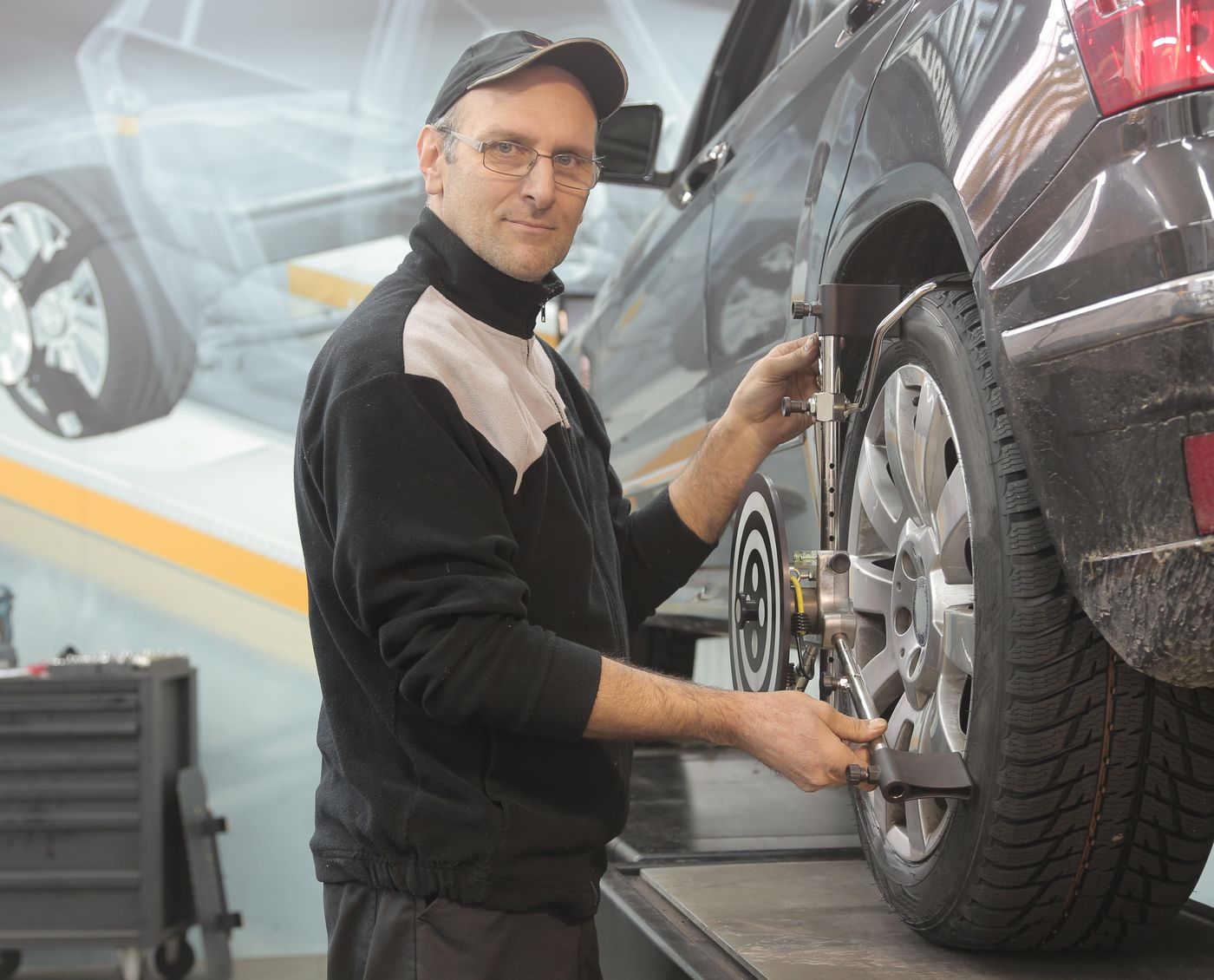
When you bring us a car pulling to one side, we start with the easy stuff: tire pressure, tread wear, and whether the front tires match. Then we look at the brakes for a dragging caliper and check the steering and suspension parts for play. If all of that is solid, we put it on the rack and check the alignment angles.
The reason we go in that order is simple. There’s no point aligning a car that has a worn tie rod, because it’ll be back out of spec before long. We’d rather find the real cause the first time. Costs vary by make and model, but finding out what’s going on is on us. Take a look at everything we work on, or get in touch and describe what you’re feeling.
For general upkeep between visits, AAA’s repair basics is a solid read.
Quick answers
Why is my car pulling to the right?
Start with the right front tire. Low pressure on that side is the most common reason. After that, alignment and a sticking brake on the right side are the usual suspects. A very slight drift to the right on a two-lane road can just be the road’s crown.
Why is my car pulling to the left?
Same list, other side: check the left front tire’s pressure and wear first, then alignment, then the left front brake. If it only happens when you brake, it’s almost certainly the brakes.
Is it safe to drive a car that pulls?
A mild pull is usually safe for a short time, but it wears out tires quickly. If the steering feels loose, clunks, or the pull came on suddenly and strongly, stop driving and have it checked.
My car pulls right after an alignment. Why?
Usually it’s a tire problem the alignment couldn’t fix, like uneven wear or a tire with an internal defect. It can also be a worn part that let the settings shift again. Bring it back and have both checked.
How often should I get an alignment?
The Car Care Council recommends checking it once a year, and any time you hit a big pothole or curb, or put on new tires.
Let us find out why it’s pulling.
Tires, brakes, steering, and alignment, all checked in one visit at our Goshen shop.
See Our Services